
SEO Blog Writing: How to Structure Content That Ranks and Gets Read
March 30, 2025 | By Dr. Umair Abid, MBBS
About the Author
Dr. Umair Abid, MBBS, is a medical professional and content writer who helps businesses and professionals communicate ideas with clarity and impact. He specializes in transforming complex information into structured, persuasive content that informs and engages audiences.
Most blog posts fail not because they are poorly written, but because they are structurally weak for search.
SEO blog writing is not just keywords and headings; it is the deliberate alignment of search intent, structure, readability, and authority signals.
This guide explains how to build a blog post that can compete in search without becoming robotic or low quality.
Table of Contents
ToggleWhat is SEO Blog Writing?
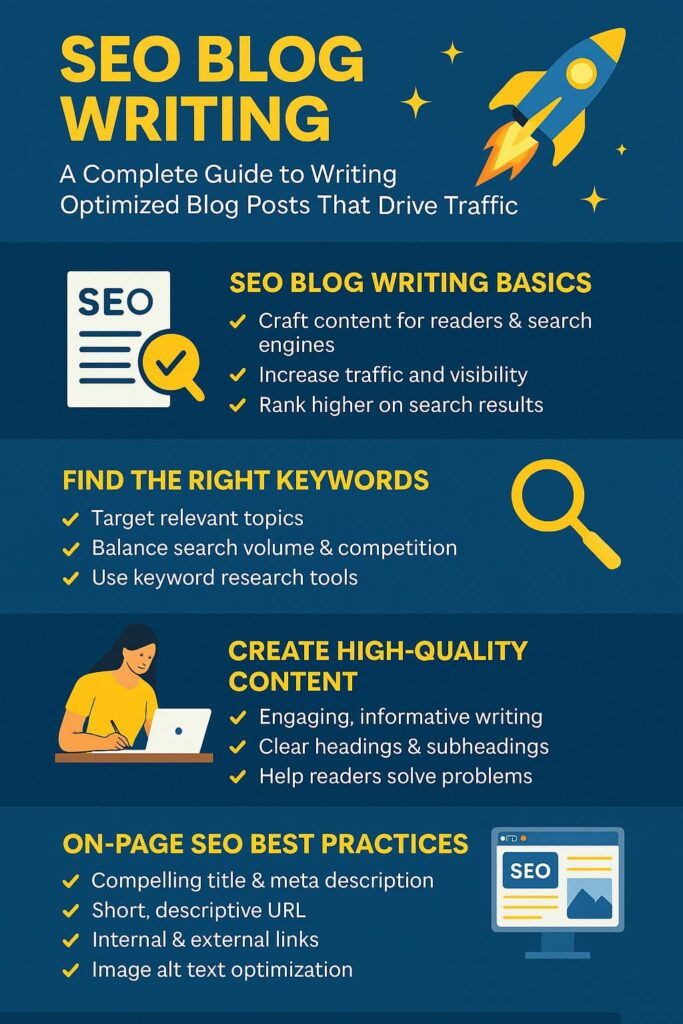
SEO blog writing is the art of crafting content that is both reader-friendly and optimized for search engines like Google. It’s not just about adding keywords randomly—it’s about delivering high-quality content while ensuring Google understands your topic.
When done right, SEO blog writing can:
✔ Increase your website traffic
✔ Attract potential customers
✔ Rank higher in search results
✔ Build your authority in your niche
For example, if you write a well-structured, keyword-optimized post on “Best WordPress Hosting for Bloggers,” you have a much higher chance of appearing on Google’s first page than if you simply write a generic hosting review.
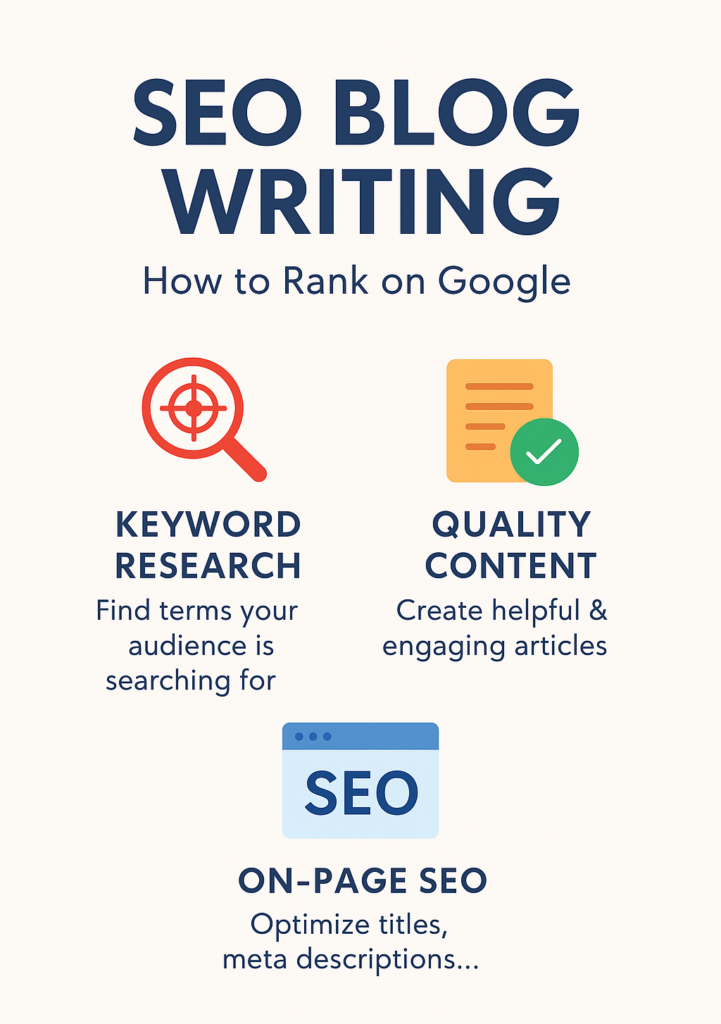
But how does Google decide which blog posts rank higher? That’s where keyword research, content structuring, and on-page SEO come in.
Keyword Research: The Foundation of SEO Blog Writing
Before you start writing, you need to know what your audience is searching for. This is where keyword research comes in.
Types of Keywords
1️⃣ Short-tail keywords → “SEO” (Highly competitive)
2️⃣ Long-tail keywords → “how to write SEO-friendly blogs” (Less competitive, more specific)
3️⃣ LSI keywords → Words related to your main keyword (e.g., “content marketing,” “SEO checklist”)
Best Keyword Research Tools
Google Keyword Planner (Free) – Great for finding search volume
Ahrefs / SEMrush (Paid) – In-depth keyword analysis
Ubersuggest (Freemium) – Easy-to-use keyword tool
AnswerThePublic – Generates question-based keyword ideas
For example, if you want to rank for “SEO blog writing,” related terms like:
“How to write SEO-friendly blog posts”
“SEO content writing tips”
“Best SEO practices for blogging”
can help optimize your content without keyword stuffing.
How to Structure a Blog Post for SEO Blog Writing
Google favors well-organized, reader-friendly content, which is the foundation of SEO blog writing.
1. Compelling Headline (H1 Tag)
Your title should:
✔ Be catchy & engaging
✔ Include your target keyword
✔ Be between 50-60 characters (for better SEO)
Example:
“The Ultimate Guide to SEO Blog Writing: From Beginner to Pro”
2. Introduction (Hook Your Readers)
Your first few sentences should:
✅ Address a pain point
✅ Include your primary keyword naturally
✅ Give a preview of what the post will cover
3. Use Headings & Subheadings (H2, H3 Tags)
Breaking content into sections helps readability and SEO.
✔ H2 = Main sections (e.g., “What is SEO Blog Writing?”)
✔ H3 = Sub-sections (e.g., “Why SEO Blog Writing Matters”)
4. Short, Digestible Paragraphs
Avoid long blocks of text! Instead:
✔ Write 2-3 sentence paragraphs
✔ Use bullet points for lists
✔ Add bold text for key takeaways
5. Internal & External Links
✔ Internal links → Link to other blog posts on your website
✔ External links → Link to high-authority sources like Moz or Search Engine Journal
6. Optimize for Featured Snippets
Google loves concise answers to common questions.
✔ Use question-based subheadings
✔ Answer in 2-3 sentences below the subheading
Example:
What is SEO?
SEO (Search Engine Optimization) is the process of optimizing web content to rank higher on search engines like Google. It involves keyword research, on-page SEO, and link-building strategies.
7. Add High-Quality Images & Alt Text
Google values visual content!
✔ Use infographics & screenshots
✔ Add alt text with keywords (for accessibility & SEO)
On-Page SEO Strategies for Better Rankings
✅ Title Tags – Include your primary keyword
✅ Meta Description – Keep it under 160 characters & include keywords
✅ URL Structure – Short, clean URLs (e.g., yoursite.com/seo-blog-writing)
✅ Mobile Optimization – Ensure your blog is mobile-friendly
✅ Page Speed – Compress images & enable caching for faster loading
How to Get Backlinks & Boost Blog Authority
Backlinks = Links from other websites to your blog. Google sees them as a vote of trust.
Ways to Earn Backlinks
🔹 Guest posting on high-authority sites
🔹 Creating shareable infographics
🔹 Writing ultimate guides & expert roundups
🔹 Reaching out to bloggers & influencers for collaborations
The more high-quality backlinks you get, the higher Google will rank your blog!
Final Thoughts
SEO blog writing isn’t just about stuffing keywords—it’s about delivering real value to your readers.
Follow these steps to master SEO blog writing and you’ll:
✔ Increase your blog traffic
✔ Rank higher on Google
✔ Monetize your content successfully
Ready to start? Begin with your first SEO-optimized blog post today!
💡 Need help with SEO content writing? Let’s connect!
📩 Email: [email protected]
🌐 Visit: https://writersframework.com
Happy blogging!